For those who enjoy bourbon, whiskey (or the alternate spelling whisky) or rye (or even scotch), it is all about understanding the regulations, the mash, and how it is aged. These are types of distilled beverages derived from a grain mash. The grain mash is made from milling a combination of grains (malted or unmalted) such as corn, rye, wheat, and barley. The combination of the grains used for the mash is called the grain or mash bill. The milled grains are combined with water, heated, and allowed to ferment to produce the alcohol. The mash, and ultimately the beverage, is a product of the exact grain bill; how the mash is “cooked”; and how the ultimate liquor is aged.
Scotch and bourbon are unique types. These are regulated by law and the use of the name is regulated much like that of an appellation for wine or cheese. Scotch whisky and bourbon are both derived from mashes and must meet specific criteria as to the ingredients used, how the mash is made, and how it is aged (in what types of barrels and how the barrels are prepared). By law, a bourbon (contrary to what some Kentuckians believe) must be produced in the United States, made from a grain mix of at least 51% corn, distilled at less than 160 proof (80% ABV), have no additives (except water to reduce the alcohol content), and is aged for a minimum of 2 years in new, charred white oak barrels. Thus, bourbon is a well-defined whiskey.
While bourbon comes from a mash that is 51% corn; to be a rye, it most come from a mash that is 51% rye. The mash bill becomes the first step in naming and labeling the distilled product. Then, there is the location – you can have “Canadian Whiskey”, “Tennessee Bourbon”, “Kentucky Bourbon”, and the list goes on. You can’t call a bourbon a Kentucky Bourbon unless it was distilled in Kentucky. Finally, there is the style – you can have a Pennsylvania style or Virginia style. This comes from both the mash bill as well as how the mash is fermented, and the liquor aged. All of these go into making a distinctly flavored alcoholic beverage that can be described using a host of adjectives.
It takes a while to learn (some say a couple of lifetimes or you may never get a handle on it all); the various subtleties between the styles. To begin your tasting adventure, I would recommend finding a colleague or establishment that has a variety to sample. The more knowledgeable they are about the mash bill and the source of the “sample” the more educated your pallet becomes. But, remember everyone has different likes and dislikes of flavors, and many of these “grow” on you as you try a variety.
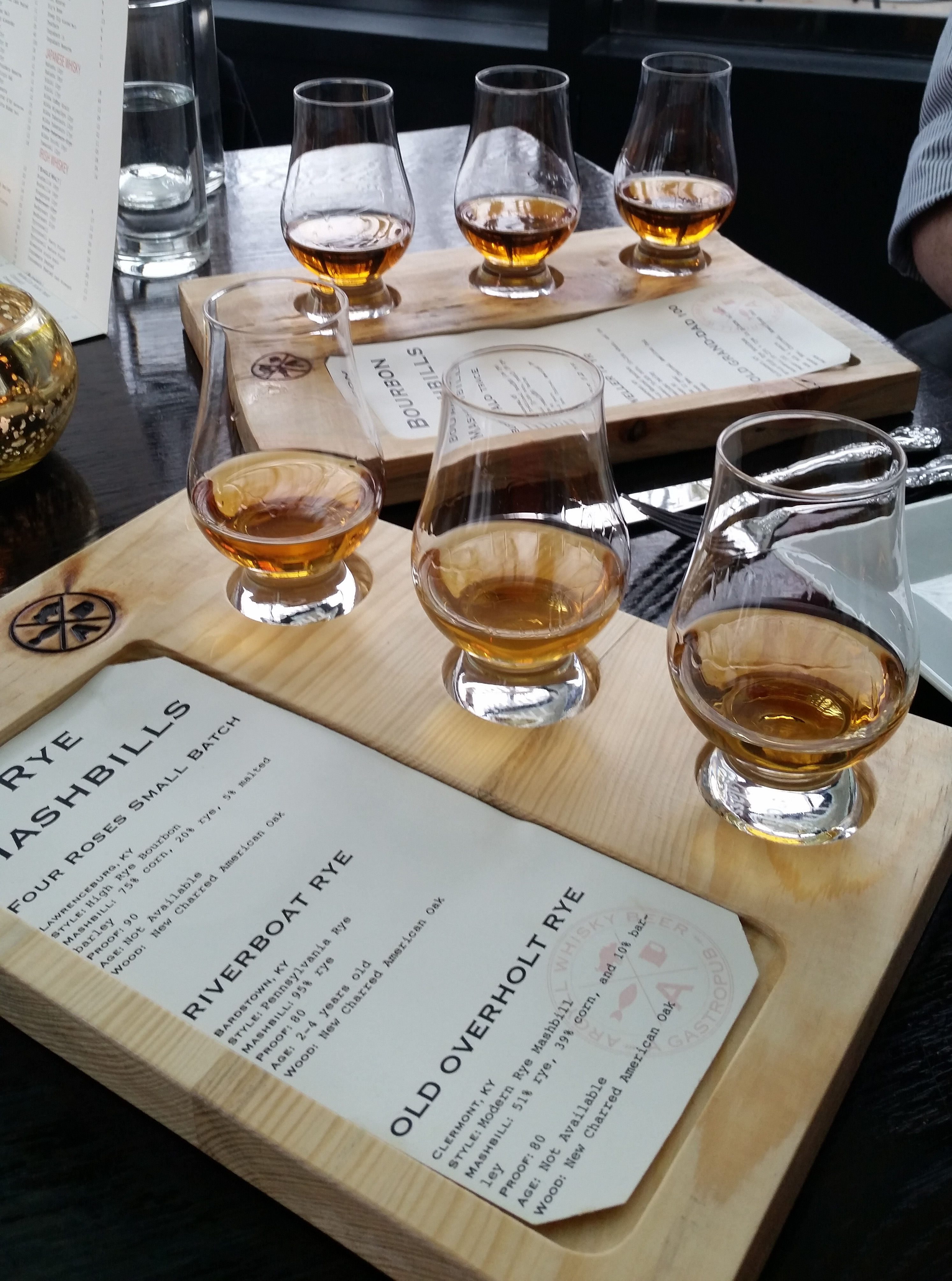
One place to start (I will be highlighting others in future blogs), if you are lucky enough to be in the Denver, CO area; I would recommend starting at Argyll Whisky Beer (http://argylldenver.com/). They have over two hundred different items to taste. The staff is extremely knowledgeable about the mash bills, styles, and the typical descriptors for the varieties. (The food and atmosphere is also a plus!) It is more fun to go with a couple of friends (then you can all have a sip or two of something different).
 Mash, Malt and Musts